
Opportunities and Risks of AI for Precision Medical Education
CLIME | Recorded January 23, 2026
In this Grand Rounds, Dr. Nitin Seam explored the opportunities and risks of artificial intelligence in medical education, with a focus on skill development, cognitive engagement, and precision training. Drawing on emerging research and real-world examples from critical care education, he examined how AI may influence learning, expertise, and clinical performance and how educators can thoughtfully integrate AI to support deliberate practice and long-term skill retention while avoiding unintended harms.
Key insights
-
AI will significantly reshape medical education, and educators must help guide its use.
-
Over-reliance on AI and short-form content may weaken deep learning and attention.
-
Time-based training alone is not enough to ensure mastery of foundational skills.
-
Deliberate practice with feedback improves performance but is difficult to scale.
-
AI can help personalize assessment and feedback to support skill development.
-
AI should augment not replace educators and expert judgment.
-
Ongoing education research is essential to ensure AI improves, rather than erodes, expertise.
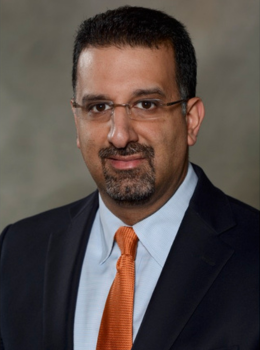
Nitin Seam, MD
Dr. Nitin Seam is a Professor of Medicine at the University of Maryland School of Medicine and a nationally recognized leader in pulmonary, critical care, and medical education research. His work focuses on mechanical ventilation, Acute Respiratory Distress Syndrome (ARDS), and improving how critical care skills are taught and sustained.
He directs the multi-center Critical Care Education Research Consortium, where his research has shown that structured, longitudinal, and simulation-based education—including web-based platforms and artificial intelligence—significantly improves knowledge retention and clinical skills among physicians and respiratory therapists.
Dr. Seam has also led translational research in ARDS and sepsis and served on the NIH COVID-19 Clinical Practice Guidelines Panel during the pandemic. From 2019–2025, he was Editor-in-Chief of ATS Scholar and is a Fellow of the American College of Physicians and the American Thoracic Society. His work has been recognized with the NIH Director’s Award and multiple Teacher of the Year honors.
WATCH THE RECORDING
Recorded on January 23,2026, Captions Available
Articles:
- Competency-Based Medical Education at the Front Lines of Patient Care. New England Journal of Medicine, 2025.
Available via UW Libraries. - Your Brain on ChatGPT: Accumulation of Cognitive Debt when Using an AI Assistant for Essay Writing.
Preprint (under review), 2025.
Available via UW Libraries. - Endoscopist Deskilling Risk After Exposure to Artificial Intelligence in Colonoscopy: A Multicentre, Observational Study.
The Lancet Gastroenterology & Hepatology, 2025.
Available via UW Libraries. - Impact of Longitudinal Mechanical Ventilation Curriculum on Decay of Knowledge.
ATS Scholar, 2024.
Available via UW Libraries.