
Addie McClintock, MD
Dr. McClintock is an Associate Professor of Medicine at the University of Washington. She attended medical school at New York University and completed her residency in Internal Medicine at the University of Washington. She is a primary care provider at the Women’s Healthcare Center, where she provides management of chronic diseases, outpatient gynecological issues, and provides family planning services. She is also the director of the Teaching Scholars Program for the School of Medicine and the founder of the Women’s Health Training Pathway for the internal medicine residency. Her scholarly work is focused on psychological safety and the learning climate in medical education.
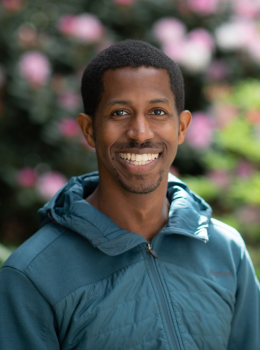
Justin Bullock, MD, MPH
Justin Bullock is an Assistant Professor in Nephrology at the University of Washington School of Medicine and the Co-director of the Docs with Disabilities Initiative. Justin is passionate about creating safe environments in medicine where everyone in the hospital is able to bring their authentic selves to work in the spirit of healing. Justin is a passionate medical educator: a teacher, researcher, and lifelong learner. His primary research focus centers on how educators can foster identity safety in the learning environment, where patients and providers can be their authentic selves in the workplace. He is currently completing a PhD in Health Professions Education at Maastricht University in the Netherlands.
He is also Associate Director of Medical Education Scholarship for the Center for Learning & Innovation in Medical Education (CLIME), Justin provides consultation services for medical education scholarship for School of Medicine faculty members. He will also provides feedback and coaching at works in progress meetings and create CLIME programming to support School of Medicine medical education scholarship efforts, in partnership with the CLIME team.
In this episode of CLIMEcast, CLIME Associate Director Kate Mulligan moderates a live Conversation Café with CLIME leaders Addie McClintock and Justin Bullock, exploring their Academic Medicine paper “Our House Won’t Rebuild Itself: Peace, Love, and Hope as Tools to Transform Graduate Medical Education.”
Drawing on scholarship, lived experience, and audience dialogue, the conversation examines how graduate medical education systems can unintentionally perpetuate harm through pain, silence, and despair—particularly for trainees experiencing identity-based harms. Drs. McClintock and Bullock discuss the house metaphor at the heart of the paper, unpacking how bias, assessment practices, professionalism norms, and power structures shape learning environments.
The episode also focuses on pathways forward. Together, the speakers explore how peace, love, and hope can serve as practical tools for rebuilding learning environments while we are still living in them—emphasizing psychological safety, identity safety, belonging, and growth-oriented assessment. Audience questions deepen the discussion, addressing faculty wellbeing, institutional accountability, and realistic strategies for everyday clinical teaching. The result is a thoughtful, candid exploration of what transformative change in medical education can look like, at both the individual and structural levels.
You can find and subscribe to CLIMEcasts on most streaming services.