2021-2022 CLIME Funded Projects
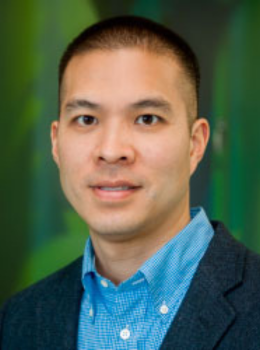
Jimmy Beck, MD, MEd
Assistant Professor
Pediatrics
Failure as a Teaching Strategy for Effective Learning in Pediatrics
Collaborator(s): Jennifer Klasen, MD, MME, University Hospital Basel, Cameron Randall, PhD, University of Washington
Grant Amount: $3,450
Abstract: The literature suggests that committing an error often provokes a strong emotional response in physicians and that physicians often find errors to have great learning value. Despite the potential learning opportunity, the utility of errors and failure has received limited attention in the literature. Based on a recent publication and informal conversations with colleagues, attendings periodically allow their trainees to struggle and even fail for educational purposes under indirect or direct supervision. That previous study explored this strategy primarily in adult providers, so there remains a lack of understanding of how pediatric providers approach teaching through failure. For this project, we aim to understand the nature and extent of purposely using failure as a teaching strategy, its pedagogical benefits and drawbacks, and its effect on resident learning and well-being. Such understanding may lay the groundwork for the development of a theoretical model that describes this practice and can support discussion of how to operationalize its use in medical education.
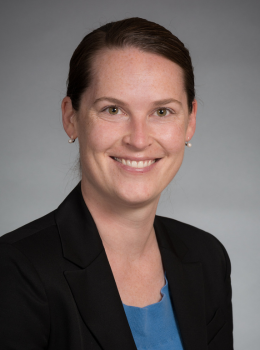
Katherine Hicks, MD
Acting Instructor
General Internal Medicine
Just-in-Time Curriculum to Teach Critical Incident Debriefing
Collaborator(s): James Wykowski, MD, Internal Medicine
Grant Amount: $3,350
Abstract: Physician burnout, in particular among physician trainees, is an area of increasing concern. Critical events, such as patient deaths and adverse patient outcomes, contribute to physician burnout and are negatively associated with provider wellbeing. Structured emotional debriefing is one method to mitigate the negative impact of these events and normalize positive coping strategies. For trainees the impact of critical events may be particularly profound early in their careers and the approach to processing these events may have long term effects on their professional identity. A comprehensive literature review revealed no existing structured curriculum focused on teaching adult medicine physicians to lead critical incident debriefs. Our novel just-in-time training will help internal medicine senior residents learn to lead brief structured debriefing sessions. Once trained, senior residents will use this format to lead debriefs for their clinical teams of interns and medical students. We will evaluate the impact of our curriculum on senior residents’ self-reported ability to lead debriefs and on the positive
coping strategies interns and medical students learn. We plan to disseminate our findings nationally.

Jeffrey Krimmel - Morrison, MD
Clinical Instructor
Internal Medicine
How Physicians Navigate Clinical Uncertainty in Primary Care
Collaborator(s): Bjorn Watsjold, MD, MPH, Emergency Medicine, Gabrielle Berger, MD, MPH, Medicine, Glenn Regehr, PhD, Surgery, Judith Bowen, MD, PhD, Washington State University, Jonathan Ilgen, MD, MCR, Emergency Medicine
Grant Amount: $4,977
Abstract: Educators frequently lament trainees’ struggles with clinical uncertainty, yet the paradox of how experienced clinicians take safe actions despite uncertainty remains poorly characterized. Recent studies have described how physicians experience and manage clinical uncertainty in the emergency department (ED). Yet these data highlight the centrality of context, specifically how clinicians use resources around them to tackle undifferentiated problems, suggesting that managing uncertainty in other settings might look quite different. Primary care visits represent the most common outpatient encounter in the U.S. and, in contrast to the ED, are characterized by establishing patient-doctor relationships, serial visits, and different available resources. Using a constructivist grounded theory approach, the proposed study seeks to explore how Internal Medicine primary care physicians (PCPs) experience and manage clinical uncertainty. Using a critical incident technique and a rich pictures methodology, we will interview PCPs immediately following work in clinic. By analyzing qualitative data from these interviews, we will aim to inform future best practices by elaborating a conceptual framework that captures these clinicians’ experiences managing uncertainty in practice.
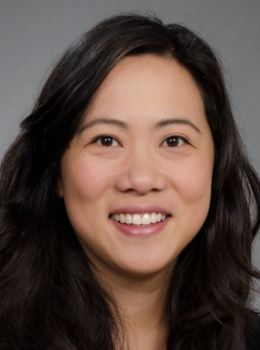
Grace Shih, MD, MAS
Associate Professor
Family Medicine
Racial Affinity Caucusing for WWAMI Residents
Collaborator(s): Patricia Egwuatu, MD, Family Medicine, Jessica Gug, MD, Family Medicine
Grant Amount: $4, 888
Abstract: There is a growing body of literature that describes the negative experience and impact of racism on Black residents and residents of color while white residents struggle to reflect on their white identity and privilege. One tool that can be used to support to residents of color and white residents is racial affinity caucusing (RAC), however the lack of diversity in the physician workforce may make it difficult for all programs to implement RAC on an individual program level. The WWAMI Network is a network of over 30 family medicine residency programs that has an established history of providing collaborative education for the region. Our project is to facilitate RAC for WWAMI residents. The WWAMI Network would host quarterly RAC sessions (one POC group; one white group) for all interested WWAMI family medicine residents. RAC groups would be led by a primary facilitator who has experience leading RAC and secondary facilitators who are WWAMI faculty interested in learning about RAC facilitation. We will examine BIPOC and white resident experiences with the aim of understanding benefits of RAC. We will also examine the training experience for RAC facilitators to identify best practices for training and facilitating resident RAC.
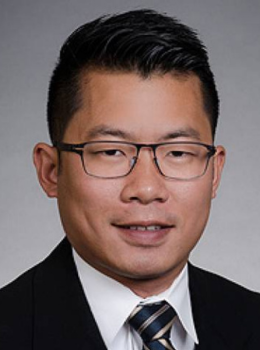
Hamilton Tsang, MD
Assistant Professor
Laboratory Medicine and Pathology
Virtual Reality Simulation and Gamification in Clinical Pathology for Resident and Medical Student Education
Collaborator(s): Joshua Liebermann, Deparment of Laboratory Medicine and Pathology
Grant Amount: $4, 950
Abstract: The COVID-19 pandemic caused a rapid evolution in medical education as remote learning was universally immediately instituted in two formerly in-person clerkships, Laboratory Medicine 685: “Laboratory Case Studies for Clinical Diagnosis” (LabM 685) and Laboratory Medicine 680: “Clinical Laboratory Testing—Methods and Interpretation” (LabM 680). The remote clerkship format provided advantages of allowing more students to participate in more locations and greater scheduling flexibility but provided challenges in terms of maintaining learner engagement and providing experiential content. Simulation and gamification of educational content is one educational modality that has shown effectiveness in a multitude of different contexts to increase learner engagement and retention and we intend to apply this methodology to a virtual reality experience. This project aims to measure learner retention and engagement of laboratory medicine content presented in virtual reality laboratory simulations and 360 walkthrough tours.