2024-2025 CLIME Funded Projects

Alexandra Collis, MD
Clinical Assistant Professor, Medicine
Clinical Assistant Professor, Surgery
How does role assignment impact learning during simulation-based team training: a phenomenological semi-structured interview study
Collaborator(s): Vince Raikhel, MD, Medicine, Caitlin Schrepel, MD, Emergency Medicine, Elizabeth Rosenman, MD, Emergency Medicine, Katherine Gielissen, MD, Internal Medicine and Pediatrics, Emory University, Heather McPhillips, MD, Pediatrics, Joshua Jauregui, MD, Emergency Medicine
Grant Amount: $5,000
Abstract: Simulation-based team training (SBTT) is a highly effective modality to prepare groups of learners to manage critical events such as a rapid response. In time compressed environments with limited resources, multiple learners are often included and assigned to different roles in each SBTT scenario and there is not always the opportunity for each learner to act as a team leader. It is not well understood, however, how role assignment impacts the experience of learners within the simulation team. The consequence of role assignment is of particular importance to medical school Transition to Residency (TTR) courses which open include rapid response SBTT to prepare graduating medical students for the UME to GME transition. Using the theoretical framework of Activity Theory, we plan to qualitatively examine the impact of role assignment on learner experience during SBTT by conducting one-on-one semi-structured interviews with first-year residents who participated in a TTR rapid response simulation session and were assigned roles of team leader or team member.

Keri DeGroot, OTD, OTR/L
Assistant Teaching Professor, Rehabilitation Medicine
Exploring use of Artificial Intelligence tools among Rehabilitation Medicine Students
Collaborator(s): Laura Johnstone, PhD, MPT, PT, Rehabilitation Medicine, Lauren Butler, MOT, OTR/L, Rehabilitation Medicine, Cody McDonald, PhD, MPH, CPO, Rehabilitation Medicine
Grant Amount: $2,119
Abstract: The integration of Large Language Model (LLM) Artificial Intelligence (AI) tools into healthcare and education presents both opportunities and challenges. This pilot study aims to investigate the current usage and training practices surrounding LLM AI tools in didactic and clinical education within the University of Washington Department of Rehabilitation Medicine Professional Degree Programs (RMDP), encompassing occupational therapy (OT), physical therapy (PT), and prosthetics & orthotics (P&O). The research study is divided into two phases with two primary aims: Aim 1 (Phase 1) focuses on quantitatively describing LLM AI usage trends of RMDP students through an online survey. Aim 2 (Phase 2) will explore student perceptions and educational needs regarding LLM AI tools using qualitative focus group discussions. Data analysis will involve descriptive statistics and thematic analysis. Anticipated outcomes include insights into student AI usage patterns, perceptions, and educational gaps surrounding LLM AI tools, informing future curriculum development and faculty training initiatives.

Ruth Deya, MD
Acting Instructor, Medicine & Global Health
Point-of-care ultrasound education in low-resource settings: expansion of curriculum for trainees and generalists at two teaching hospitals in Kenya and impact Assessment
Collaborator(s): Nicholas DesLauriers, MD, Medicine, Daniel Ojuka, MD, Surgery, Kenyatta National Hospital, Douglas Bosibori, Director of Education, Naivasha Sub-County Referral Hospital, Carey Farquhar, MD, Global Health, Sara Nikravan, MD, Anesthesiology and Pain Medicine
Grant Amount: $3,495
Abstract: Point-of-care ultrasound (POCUS) can be a highly versatile and impactful tool in low-resource settings given that it improves diagnostic accuracy, outcomes for bedside procedures, and is relatively affordable. Despite growing availability, POCUS is not commonly used in many low- and middle-income countries. This is true in Kenya, where baseline surveys conducted at Naivasha Sub-County Referral Hospital and Kenyata National Hospital have demonstrated that trainee and generalist clinicians at these facilities have limited prior POCUS training, although there is great interest in expanding POCUS curriculum and a belief that it would improve patient care. Our multi-institutional team of clinician educators propose to pilot a POCUS curriculum at these teaching hospitals, followed by measurement of curriculum impact. Our aim is to strengthen POCUS training at teaching hospitals in Kenya while building global collaboration in medical education.
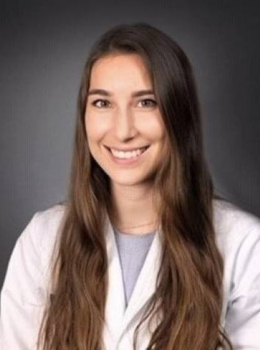
Florence Lambert- Fliszar, MD
Pediatrics
Pediatric Resident Curriculum: The Care of Children with Somatic Symptoms and Related Disorders
Collaborator(s): Hannibal Person, MD, FAAP, Pediatric Gastroenterology
Grant Amount: $4,450
Abstract: Somatic symptoms and related disorders (SSRDs) are an increasingly prevalent diagnosis in the pediatric population, yet clinicians have significant misconceptions and knowledge gaps that negatively impact patient care. Additionally, we know that patients with SSRDs have markedly improved prognoses in return to function when patients and families understand and accept the diagnosis. To address knowledge gaps, especially knowing the importance of effective communication in these diagnoses, we propose a novel curriculum for pediatric residents to build skills and a new biopsychosocial framework for effective SSRD diagnostic conversations. We use David Kern’s Six Steps in curriculum development, including a formal targeted needs assessment, and frameworks of patient-centered, empathetic communication to teach memorable communcation scripts and methods via reflection and role-play. We will evaluate the curriculum with a process-based approach, the Context-Input-Process-Product model.
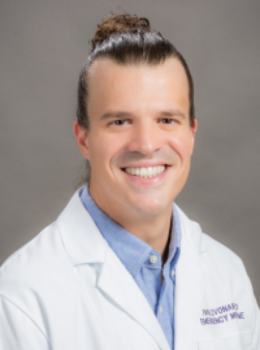
Ivan Zvonar, MD
Acting Instructor, Department of Emergency Medicine
Intended and Unintended Consequences: A Qualitative Exploration of Emergency Medicine Residents’ Experiences with Patient Handoffs
Collaborator(s): Naeem Bayaa, MD, UW Emergency Medicine, Max Griffith, MD, UW Emergency Medicine, Alexander Garrett, MD, UW Emergency Medicine, Bjorn Watsjold, MD, UW Emergency Medicine, Laura Welsh, MD, Boston Medical Center, Emergency Medicine, Joshua Jauregui, MD, Emergency Medicine, Jon Ilgen, MD, PhD, Emergency Medicine
Grant Amount: $4,390
Abstract: The process of handoff is central to the safe transition of medical care. Miscommunication during times of handoff can result in adverse events, and therefore structured tools to improve handoff focus on standardized communication. However, handoff also represents a time of complex social dynamics that have not been well studied, particularly through the lens of the resident trainee. Exploring these processes, and the intended and unintended consequences for the trainee that result from engaging in the handoff process, is crucial to gaining a better understanding of resident experiential learning. Therefore, we propose a qualitative study that will explore these moments of resident physician interactions, focusing on the emergency department, as this area’s innate qualities magnify the complexities of these processes. The study will be performed using a constructivist grounded theory approach, which utilizes inductive techniques to generate theory. The aim of this study is to generate a better understanding of these social processes at their consequences to trainees, in order to inform ongoing efforts and structures that promote supportive learning environments.